Trawling and bycatch: The fishing issues in Alaska’s Senate race
The majority of Alaska voters want a ban on trawling, according to recent surveys.
Trawling and bycatch have become central issues in the race for Alaska’s U.S. senate seat this year.
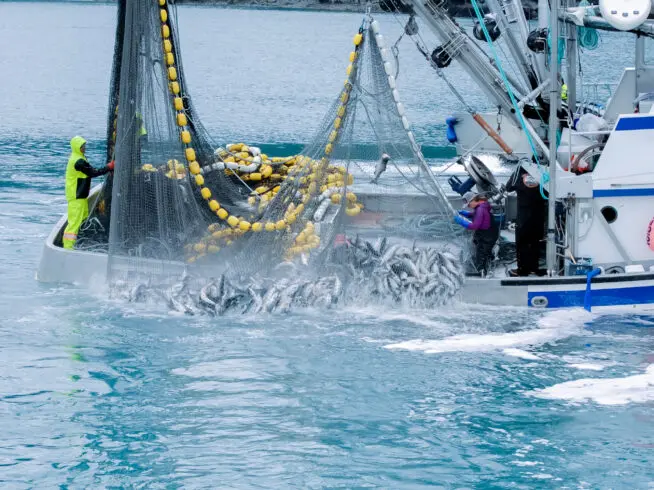
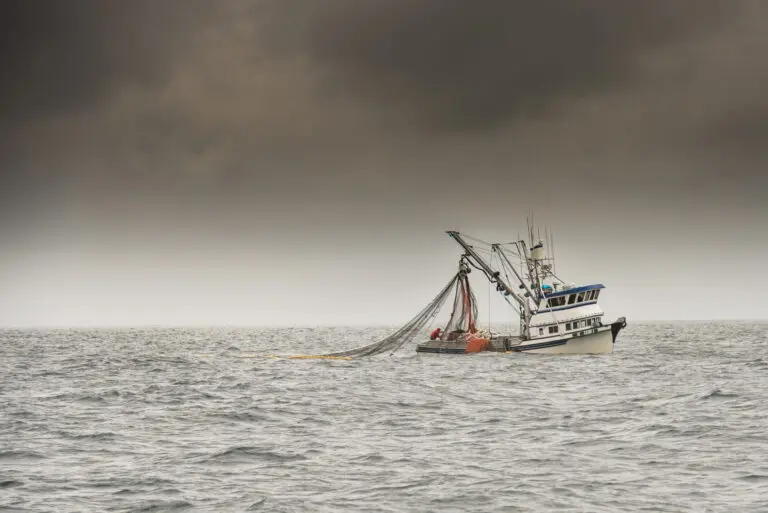
Trawling is a fishing practice that involves boats dragging large nets through the water and along the ocean floor to capture species like pollock, other groundfish, and crabs. Bycatch is an industry term that refers to fish or animals that are unintentionally caught when fishermen are fishing for other species. Those fish that are accidentally caught are typically discarded while a small amount will go to hunger relief groups, according to reporting from Alaska Public Media.
The practice of trawling has come under fire from members of the public, fishermen, lawmakers, tribal leaders, and environmentalists. They point to concerns about trawling bycatch and the impact trawling has on the Alaskan fishing industry, the health of the state’s waters and local economies.
“All juvenile fish rely on complex habitat to have places to hide from predators, and then other fish depend on that kind of habitat throughout their full life cycle — so rockfish, lingcod, halibut,” Linda Behnken, a commercial fisherman from Sitka and the executive director of the Alaska Longline Fishermen’s Association, told the Alaska Independent. “Trawling tends to simplify habitat. It knocks over, breaks, flattens things like corals, sponges, sea whips that are part of the habitat that’s important to the fish we depend on.”
Anti-trawl individuals and groups often cite bycatch as one of the reasons for the state’s dropping salmon population. The loss of salmon has a particular impact on Native Alaskan communities that have long held a deep connection with the fish, both for food and as part of their cultural practices. Republican state Sen. Mike Cronk pointed out in a presentation about his bill to end bottom trawling in state waters that, in 2024, two trawlers accidentally caught 2,000 pounds of king salmon, which resulted in federal officials closing an entire fishery to avoid the fleet there going over the annual cap on unintentional king salmon harvesting.
Climate change is another factor in the loss of salmon populations, both scientists and defenders of the trawling industry note, bringing with it, for example, a proliferation of invasive northern pike, which feed on juvenile salmon.
“Our ocean is also under stress from climate change, and trawling isn’t the only stress being put on our ocean and the only driver of some of these fish stock issues,” Behnken said. “But when an ecosystem’s under stress, you need to be that much more careful of habitat and of the fish stocks that are important to Alaskans. And now is the time to do that.”
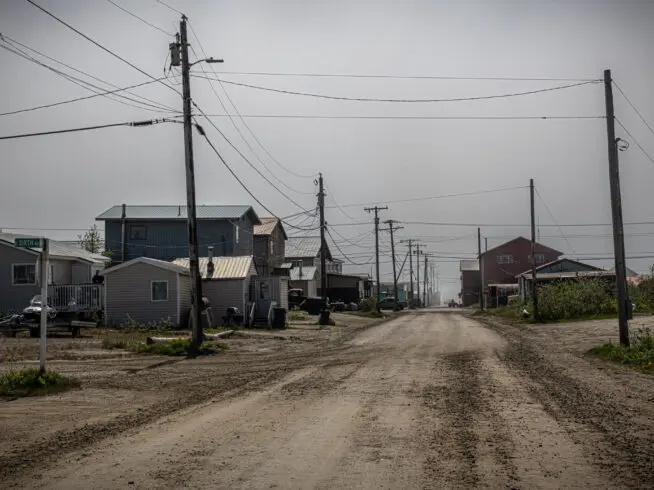
According to Alaska-based groups like the 907 Initiative, which recently launched a Stop Big Trawl campaign, and Salmon State, trawlers in recent years have bycaught millions of pounds of salmon in the waters around Alaska, as well as millions of pounds of other kinds of fish such as halibut and herring. Orcas have also been caught. Critics have said the loss of salmon from trawling is especially pronounced at a time when the salmon shortage is causing Native communities to struggle financially and is harming their physical and mental health.
In response to the salmon shortage in Alaska, federal regulators have implemented a multiyear ban on Chinook salmon fishing in the Yukon River. The ban has financially harmed tribal communities and has left people without a critically important cultural practice, the Alaska Beacon reported.
“Salmon is our identity,” Brian Ridley, the chief/chairman of the Tanana Chiefs Conference, told Alaska state lawmakers in April.
A majority of likely Alaska voters supported a ban on trawling, according to a 2025 survey conducted by Data for Progress, a left-wing think tank. The poll found that 74% of Alaska voters supported banning trawling off the coast of Alaska and 67% believed fishing should be limited to rural residents when salmon are scarce.
Trawling companies point to the jobs and economic input to the Alaska economy provided by the industry.
Behnken said trawling harms local economies in Alaska and bycatch results in Alaskans not being able to engage in subsistence fishing because of low fish numbers. Others have cited similar concerns.
“Our family’s small business depends on the health of Alaska’s oceans and fisheries, which visitors travel thousands of miles to experience,” Timothy Ozerkov, owner of Oz Lodge in Seward, Alaska, told the National Fisherman in March. “Banning bottom trawling is a meaningful step toward the long-term sustainability and health of Alaska’s fisheries and fishing economy.”
The issue has made national headlines in the race for the Alaska Senate seat now held by Republican Sen. Dan Sullivan. Mary Peltola, the Democratic candidate running against Sullivan, became the first Alaska Native member of Congress after winning the state’s only U.S. House seat in a special election in 2022. Peltola’s House campaign largely centered around salmon and addressing bycatch.
Both candidates say they want to address the issue in Congress. Sullivan introduced legislation in June to reduce bycatch, though critics said that the bill mirrors legislation put forward by Peltola while she was in the House and that it only goes as far as the industry will “let him go.”
“I’ve heard from countless Alaskans—from subsistence harvesters to commercial and recreational fishermen, and from residents of coastal communities to upriver villages—who are rightfully demanding direct action to reduce bycatch and gear contact with the seafloor to better protect our fisheries,” Sullivan said in a press release announcing his bill.
Sullivan’s campaign asked for additional information about the story, but did not provide comment before publication.
Peltola, whose campaign motto is “Fish, family, freedom,” in June released a plan to address declining fisheries, which includes a call to ban factory trawling and increase Native Alaskans’ role in making decisions about fisheries in Alaska. The state produces more than half of all the fish caught in waters off the coast of the United States.
“Alaska needs leaders who will actually fight to save our fish, not talk out of both sides of their mouth when election time rolls around,” Peltola said in a statement provided to the Alaska Independent. “Fixing the rigged system in DC that’s shutting down Alaska calls for bold action, and that includes fighting for a ban on factory trawling. I will fight for practical, Alaska-first solutions to restore our fisheries, support Alaska fishermen, and ensure that the next generation can experience the same abundance Alaskans have enjoyed for generations.”
Critics of Sullivan have gone after the senator for accepting contributions from the trawling industry, which federal data shows has given about $280,000 to Sullivan since he took office in 2015. Trawl industry executives and an industry political action committee made contributions totaling about $10,000 to Peltola after she was elected to the House in 2022, according to Alaska Public Media. This year, Peltola received $500 from a trawling industry executive but is returning that contribution, according to reporting from Alaska Public Media.
One of Sullivan’s donors, the Seattle-based Trident Seafoods, agreed in 2011 to pay a $2.5 million civil penalty after the U.S. Justice Department said the company violated the Clean Water Act. In 2018, Trident Seafoods was fined $300,000 for more Clean Water Act violations, including oversized fish waste piles at two Alaska plants.